How to hold a knife, protect your fingers with the claw and chop onion, garlic and herbs evenly. The basics of knife skills, no chef training needed.
Why it's worth an evening
Good knife skills aren't about speed. They are about pieces of the same size, so everything in the pan is done at the same time, and about keeping all your fingers. Speed comes on its own once the movement is second nature.
Practise on a bag of onions. They are cheap, and you need chopped onion in almost everything anyway.
Three knives are enough
- Chef's knife, 18–21 cm (7–8 in): does almost everything. Chops, slices, dices and crushes garlic.
- Paring knife, 8–10 cm (3–4 in): for small jobs in the hand, like coring an apple or cutting a blemish out of a potato.
- Serrated bread knife: for bread, ripe tomatoes and anything with a hard outside and a soft inside.
A twelve-piece knife block usually holds three knives you use and nine you move around. Put the money into one good chef's knife instead.
The grip: hold the blade, not just the handle
Pinch the blade just in front of the handle, thumb on one side and the side of your index finger on the other. Wrap the other three fingers around the handle. It feels odd at first, but the knife stops wobbling and you steer it with your hand rather than your wrist.
Holding only the handle with a finger along the spine tires your hand faster and pulls cuts off to one side.
The claw protects your fingers
Your other hand holds the food, and it should form a claw. Curl your fingertips in so your knuckles lead, and rest the flat of the blade against them. Keep your thumb tucked behind your fingers.
Now the knife can travel up and down without ever reaching your fingertips, and your knuckles set the thickness of the next slice. Walk the claw back a little at a time.
Four cuts you'll use every week
Rock chop. The tip stays on the board and you rock the blade up and down through the food. Good for herbs, garlic and anything that needs to be fine.
Push cut. The whole blade lifts and you push the knife forward and down through the food. Gives clean slices of carrot, cucumber and potato.
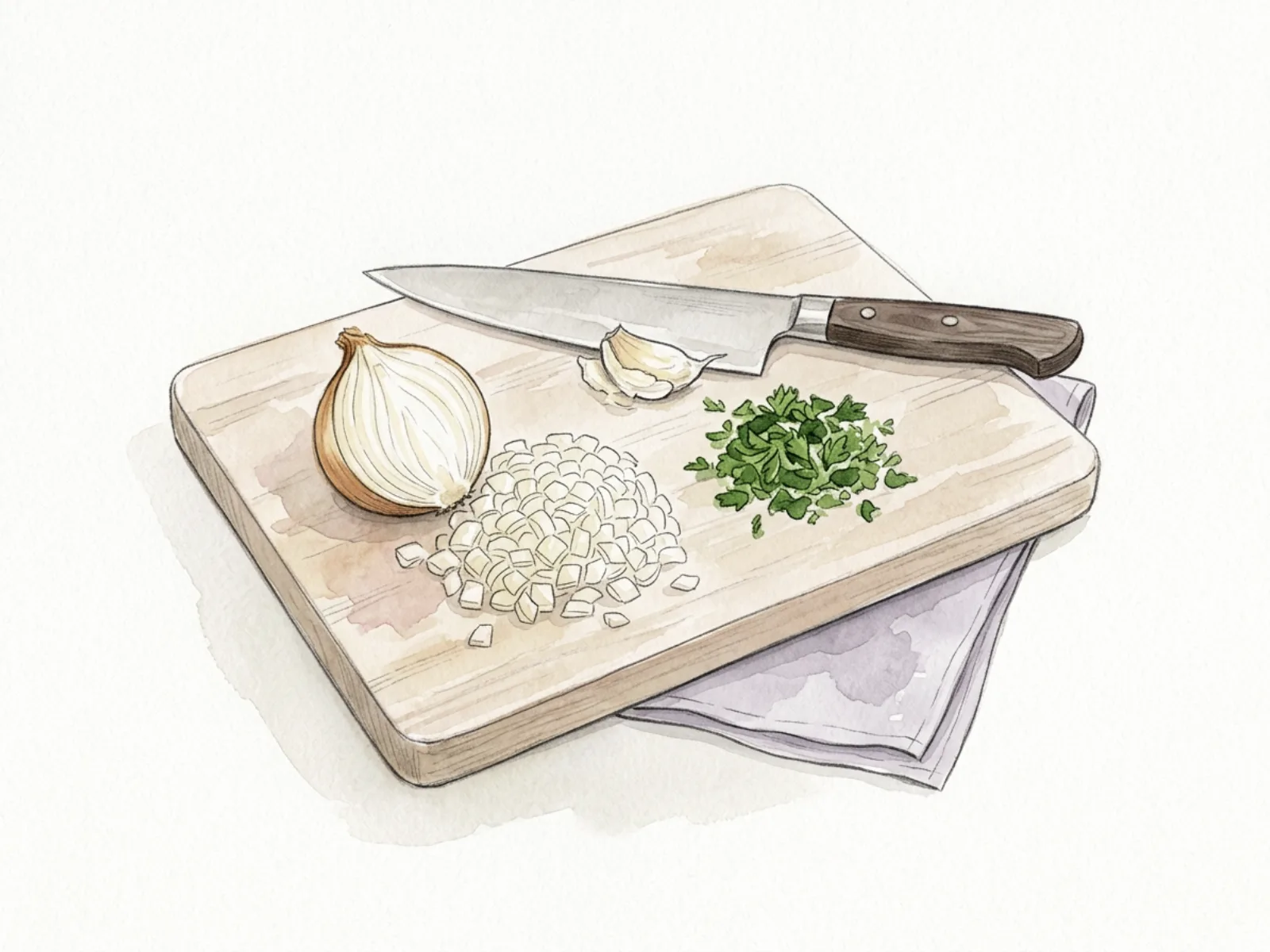
Dicing an onion. Halve the onion through the root and peel it. Lay it cut side down, slice closely lengthways with the root left on, then slice across. The root holds the onion together, so it only falls apart when you want it to. With an ordinary brown onion you can skip the horizontal cuts.
Crushing garlic. Lay the clove under the flat of the blade and press down with the heel of your hand. The skin lets go and the clove is easy to mince with a rock chop.
A steady board and a sharp knife
Put a damp cloth or a sheet of kitchen paper under the chopping board so it doesn't slide. It is the simplest way to avoid an accident.
A dull knife is more dangerous than a sharp one. It skids off tomato skin and onion peel instead of cutting, and you follow it with more force. Hone the edge on a steel every week and have it sharpened a couple of times a year. If you can't slice a tomato without squashing it, it's time.
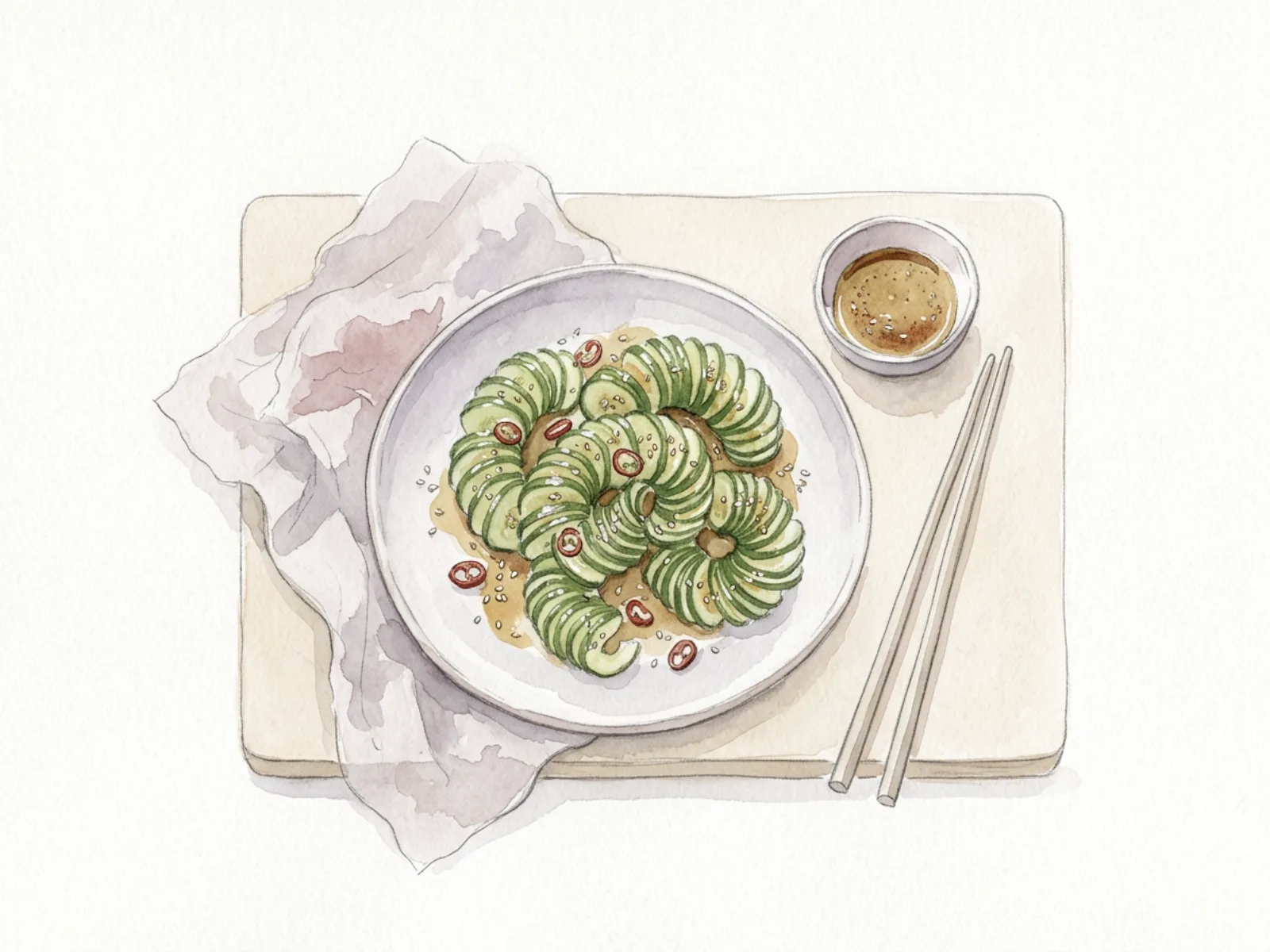
Practise on what you're cooking anyway
Pick one dish a week with plenty of chopping. The spiral-cut cucumber trains even cuts, and a weekly plan built around a cabbage gives you a whole head to shred. Save the recipes in Samla, and the practice is planned rather than forgotten.